
Protein powder has become a popular choice among fitness enthusiasts, athletes, and health-conscious consumers. As demand for protein supplements continues to grow, brands are looking for packaging solutions that can preserve product quality, improve convenience, and support efficient distribution. Flexible packaging has emerged as a practical option for protein powder manufacturers, offering a combination of product protection, functionality, and design flexibility.
Compared with traditional rigid containers, flexible packaging allows brands to develop customized packaging that meets the specific requirements of powdered supplements while enhancing the overall consumer experience.
Protects Protein Powder from Moisture and Oxygen
Protein powder is sensitive to environmental factors such as moisture, oxygen, light, and heat. Exposure to these conditions can affect its quality, texture, flavor, and shelf life. Moisture is particularly important because it may cause powder to absorb water, form lumps, and become difficult to dispense.
Flexible packaging helps protect protein powder through carefully selected multilayer film structures. Depending on the product’s formulation, storage conditions, and required shelf life, manufacturers can combine materials such as PET, PE, metallized films, or aluminum foil to achieve the necessary barrier performance.
By selecting the right packaging materials and barrier properties, protein powder brands can help maintain product freshness and quality from production to consumption.
AL vs. VMPET: Choosing the Right Barrier Material for Protein Powder Packaging
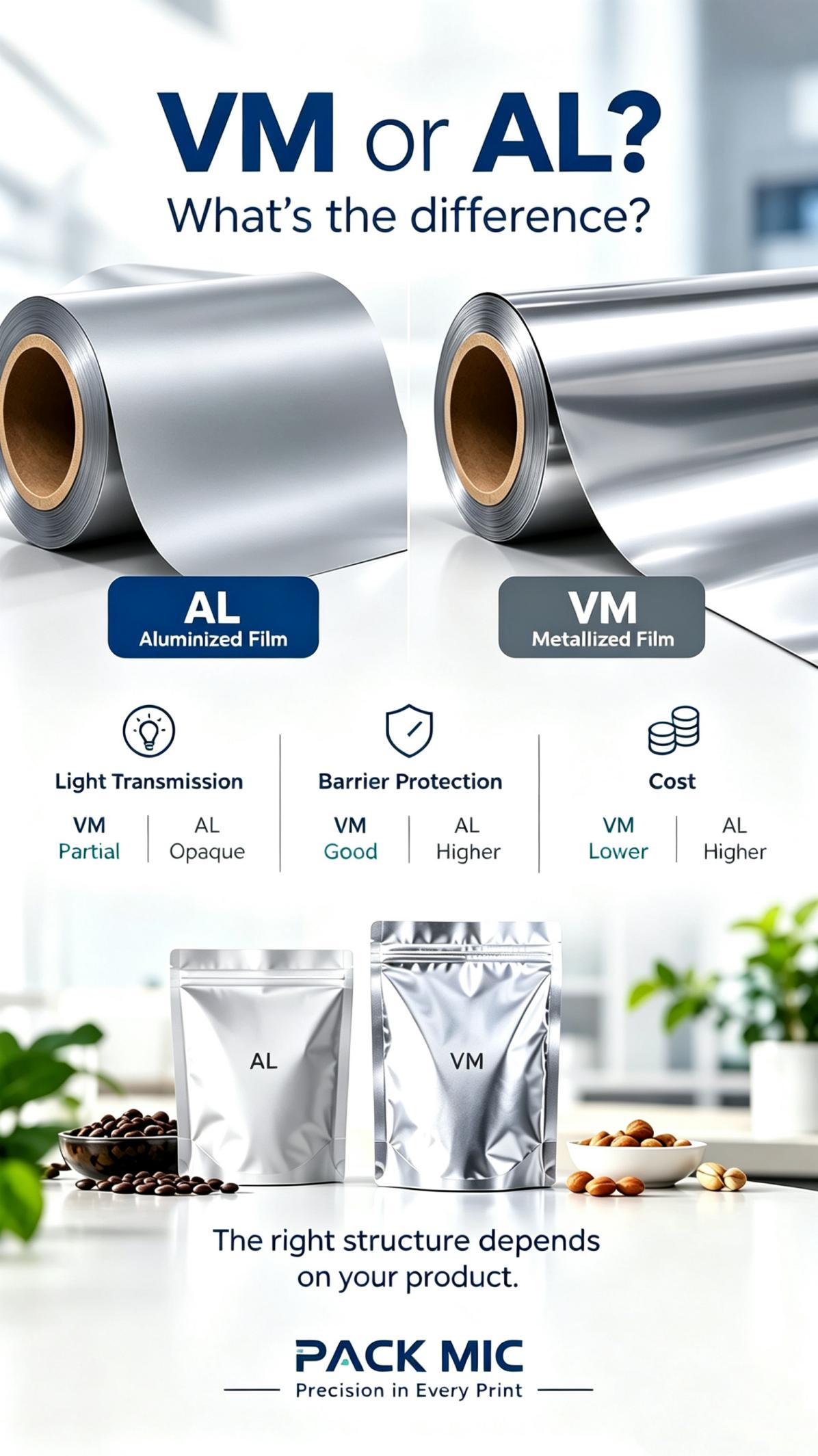
When selecting flexible packaging materials for protein powder, aluminum foil (AL) and metallized PET (VMPET) are two common options for improving barrier performance. Both materials help protect protein powder from external environmental factors, but they differ in barrier properties, cost, and application requirements.
Aluminum foil provides an excellent barrier against moisture, oxygen, and light, making it a suitable choice for protein powder products that require a high level of protection and extended shelf life. It is often used in high-barrier laminated structures such as PET/AL/PE, where the aluminum foil layer helps maintain product quality during storage and transportation. However, aluminum foil generally comes at a higher material cost and requires careful handling during packaging production to maintain its barrier integrity.
VMPET,is a PET film coated with a thin layer of aluminum. It offers good moisture and oxygen barrier properties while providing a metallic appearance that enhances packaging aesthetics. Compared with aluminum foil, VMPET is often a more cost-effective option for protein powder packaging when the product does not require the highest possible barrier level. It can also be incorporated into flexible packaging structures such as PET/VMPET/PE to balance product protection, appearance, and cost.
The choice between AL and VMPET depends on the protein powder’s formulation, target shelf life, distribution conditions, and packaging budget.
Maintains Freshness After Opening
Protecting protein powder before opening is only part of the packaging challenge. Once consumers open a package, repeated exposure to air and moisture can affect the remaining product.
Resealable flexible packaging offers a convenient way to help preserve product quality after opening.
A powder-resistant zipper is designed to reduce the likelihood of fine powder becoming trapped in the zipper tracks, helping consumers close the package securely after each use. This feature also makes the packaging easier to use over time.
Other functional features, such as tear notches and slider closures, can further improve the opening and closing experience. With the right resealable design, flexible packaging helps consumers store protein powder conveniently while reducing the risk of spills and unnecessary exposure to moisture.
Reduces Transportation Costs and Improves Logistics Efficiency
Protein powder is distributed through various channels, including retail stores, gyms, online marketplaces, and direct-to-consumer e-commerce. As shipping costs and logistics efficiency become increasingly important, packaging weight and space utilization deserve careful consideration.
Traditional rigid containers require a fixed shape and occupy a certain amount of space, even when empty. Flexible pouches, by contrast, can be shipped flat before filling, reducing storage requirements and transportation volume.
Their lightweight construction can also help reduce the overall weight of packaged products. Depending on the package size, material structure, and shipping configuration, flexible packaging may allow more units to be transported within the same available space.
For protein powder brands, these advantages can help improve warehouse efficiency, simplify inventory management, and reduce transportation-related costs.
Flexible packaging can also contribute to more efficient resource use throughout the supply chain. Its lightweight design may reduce the amount of packaging material required compared with some rigid alternatives, while more compact transportation can help lower fuel consumption and associated emissions.
Provides Convenience for Active Lifestyles
Protein powder consumers often lead active lifestyles and need packaging that is easy to carry, store, and use.
Flexible packaging can be designed in different sizes and formats to suit a wide range of consumption habits. Larger resealable pouches are suitable for home use, while smaller sachets and single-serving pouches offer a practical option for travel, workouts, and on-the-go nutrition.
Compared with bulky containers, flexible pouches can be easier to fit into gym bags, backpacks, or kitchen storage spaces. Their lightweight construction also makes them convenient for consumers who regularly carry supplements with them.
Supports More Sustainable Packaging Design
Sustainability is becoming an increasingly important consideration for protein powder brands. Consumers are paying closer attention to packaging materials, recyclability, and the environmental impact of products they purchase.
Flexible packaging offers several opportunities to improve packaging resource efficiency. Lightweight structures can reduce material usage and transportation weight, while advances in packaging technology are making recyclable and alternative material options more accessible.
For example, mono-material PE or PP structures may be suitable for certain protein powder applications, depending on the required barrier performance, sealing properties, and packaging equipment. These structures can simplify material composition and may support recycling through appropriate collection and recycling programs where available.
However, not every sustainable material is suitable for every protein powder product. Moisture protection, oxygen barrier requirements, seal integrity, and compatibility with filling equipment must all be considered when selecting packaging materials.
A well-designed flexible packaging solution balances product protection, functionality, and material efficiency to meet both brand and consumer expectations.
Post time: Sep-22-2026


